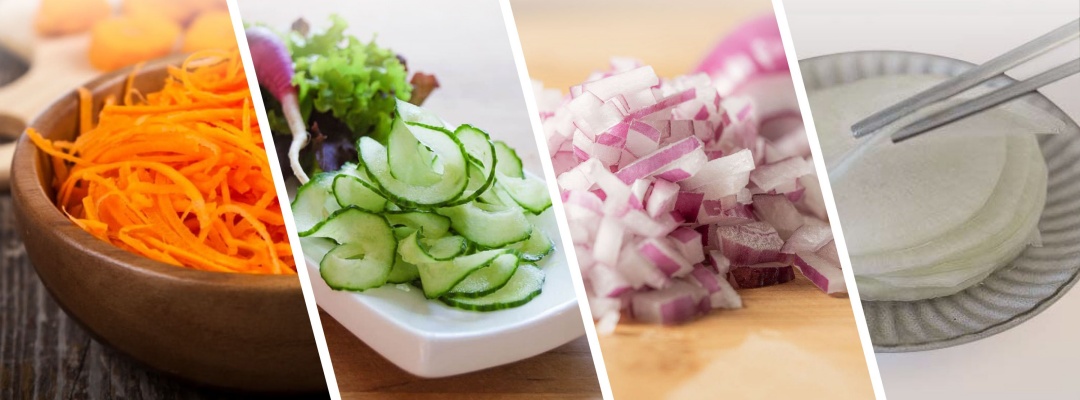
Benriner Mandoline
Paper-thin slices in seconds, and your fingertips stay out of the way.
The Benriner mandoline is the Japanese slicer professional cooks have trusted for over 70 years. One hand-sharpened blade, a stepless thickness dial from 0.5 to 8 mm, and three julienne blades in the box — so chips, slaw, fries, and zoodles all come from one tool that fits in a drawer. Choose your size below: the compact No. 64, the best-selling Super No. 95, or the extra-wide Jumbo No. 120.
best seller
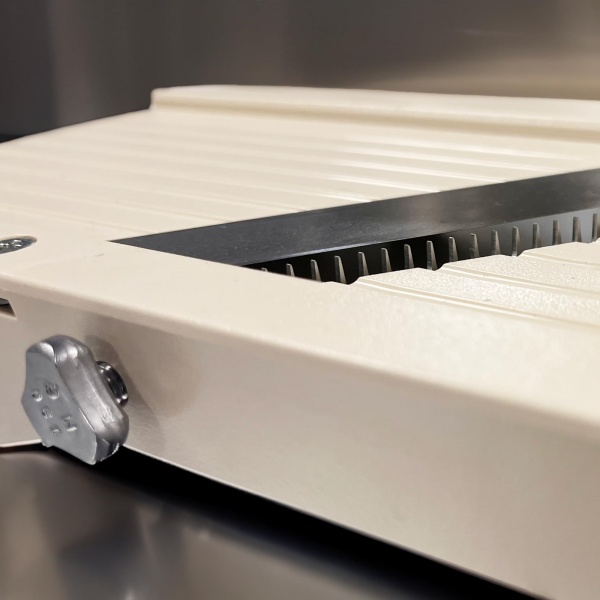
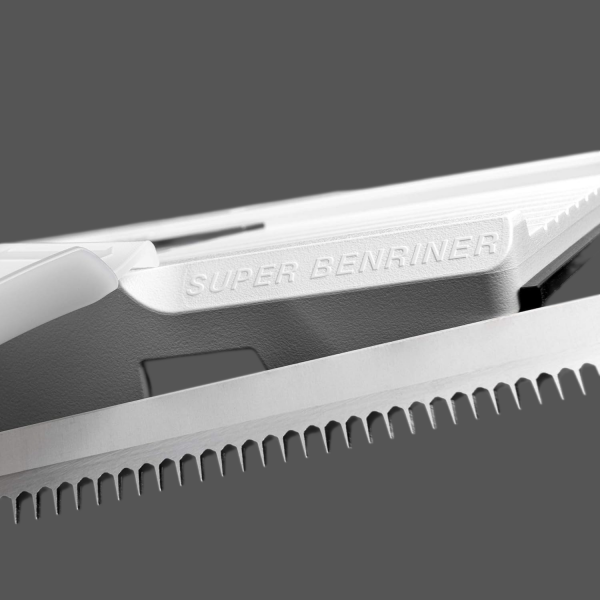
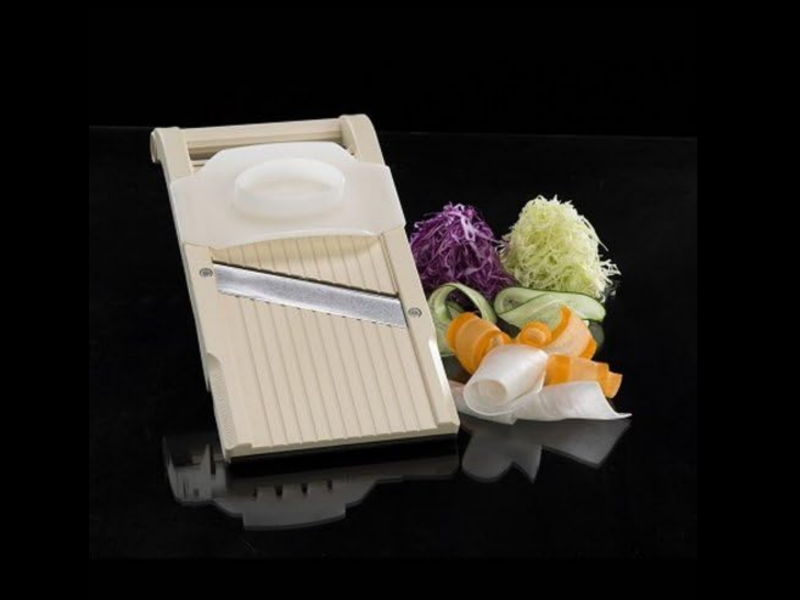
Benriner Mandoline Slicer
Classic No. 64
2.5″ Slicing Surface · Handcrafted Japanese Blades · 4 Cuts in One · Stepless Dial · Hooks Over Any Bowl
BEST FOR
Chips · French fries · hash browns · stir-fry · zoodles · garnish · salad toppings
SLICING SURFACE
2.5 inches wide
BLADES
Handcrafted Japanese stainless steel · 1 fixed straight blade + 3 interchangeable blades (coarse, medium, fine tooth)
THICKNESS
Easy-turn dial, 0.5 to 8 mm (about 1/50″ to 1/3″)
BODY
BPA-free plastic · large open handle · non-skid rubber base
SAFETY
Finger guard grips small end pieces, so less gets wasted and fingertips stay clear
CARE
Fully disassembles · hand wash only to keep the blade sharp
Benriner Mandoline Features
Hand-Sharpened Japanese Blades
Japanese stainless steel blades compressed, heat-treated, and finished by hand — sharp enough to hit 0.5 mm paper-thin slices straight out of the box.
Stepless Thickness. Total Control.
No fixed clicks. No guesswork. Dial in exactly the cut you need — from translucent radish shavings to thick sweet potato planks — with one smooth turn of the knob.
Built to Come Apart. Easy to Clean.
Every component detaches cleanly. The blade, the body, the cover. Rinse each piece separately and you’re done in under two minutes. No soaking. No scrubbing around a fixed blade.
Stable. Compact. Ready Anywhere.
Rubber non-slip base keeps it planted on the counter or hooked over a bowl. Slim enough to slide into a kitchen drawer. Light enough to pull out without thinking twice.
Shop by Model
Three Benriners, One Standard of Sharp
Same hand-sharpened Japanese steel in every one. The difference is size, setup, and what you’re slicing.
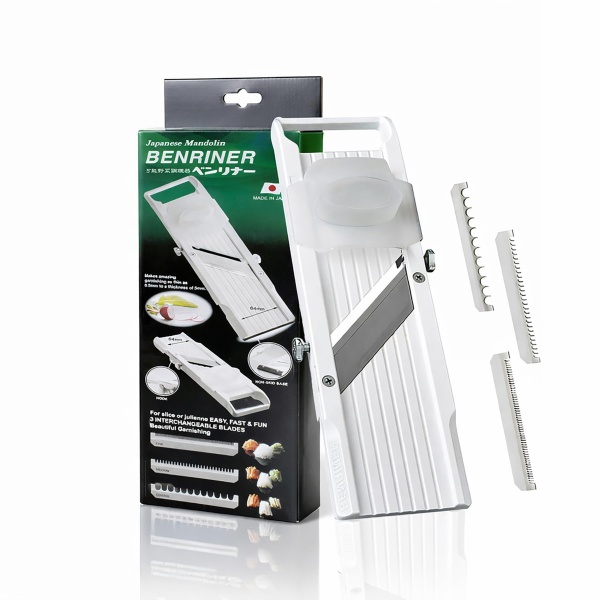
Classic No. 64
The Compact Starter
- Slicing Width: 2.5 inches (64 mm)
- Thickness: Adjustable
- Best For: Cucumbers, carrots, radishes, zucchini, everyday produce
2.5″ slicing width. Perfect for 1–2 people, cucumbers, carrots, and radishes. Fits any kitchen drawer.
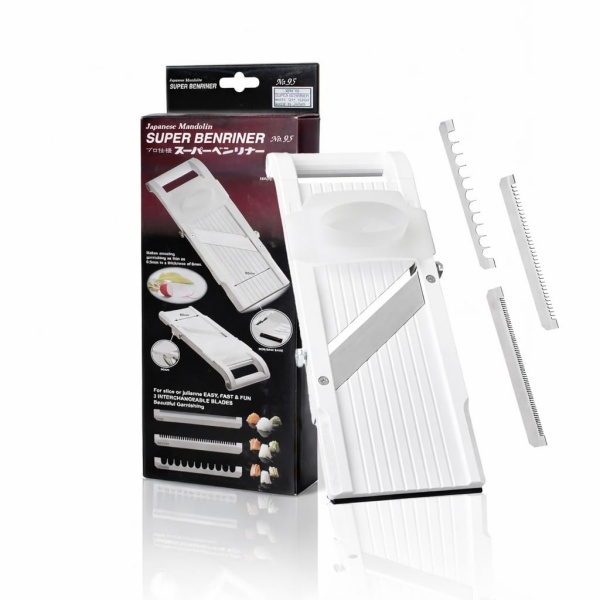
Super No. 95
The Everyday Workhorse
- Blades: 4 Japanese stainless steel blades
- Cuts: Straight slices + 3 julienne widths
- Best For: Daily side dishes, salads, stir-fry prep
3.7″ slicing width takes whole onions, fennel, and apples. A larger dial holds your setting through long prep sessions. The right size for most families.
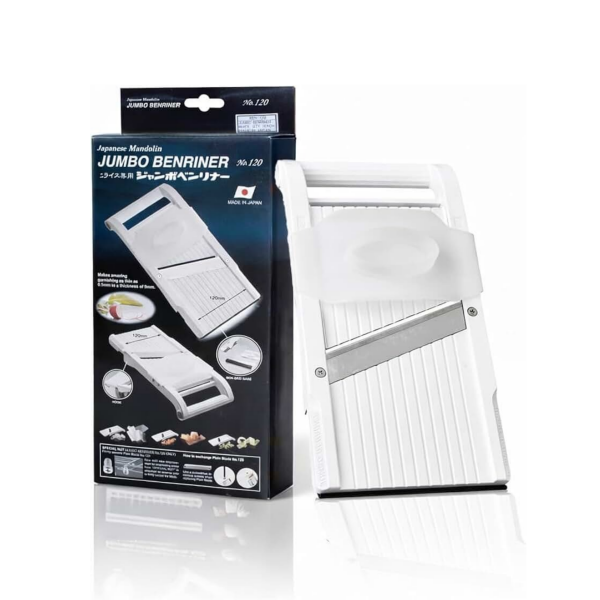
Jumbo No. 120
The Big-Batch Beast
- Slicing Width: 4.7 inches (120 mm)
- Thickness: Adjustable up to about 9 mm
- Best For: Eggplant, half-head cabbage, watermelon, large-format cooking
Whole eggplants, big russets, and cabbage halves go across without trimming. Built for holiday gratins and weekly meal prep. Needs shelf space, not a drawer.
Benriner Mandoline Selection Guide
Choose Benriner Mandoline by the Dish
Pick the dish first. The blade and the right model follow from there.
Chips and Shaved Salads
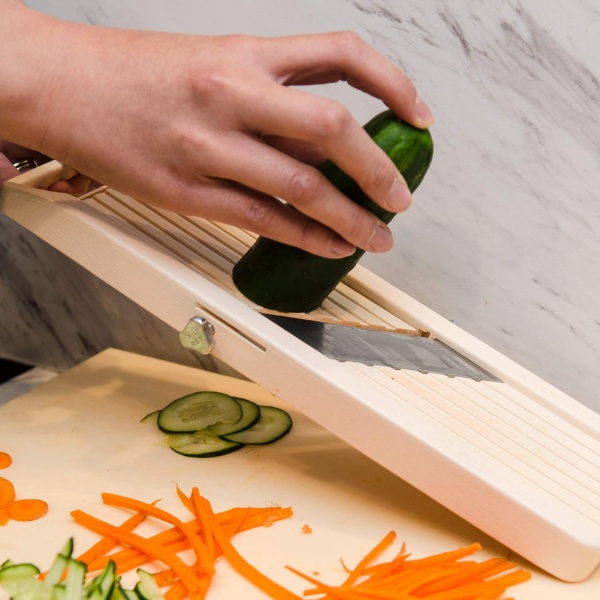
Super Slicer No. 95.
It’s wide enough to take a whole fennel bulb or a big russet without trimming.
This is the cut a knife just can’t match. Set the flat blade to 0.5–1 mm and potatoes, radishes, fennel, and apples come out thin enough to curl in ice water or crisp up in the oven in minutes. It’s perfect for baked chips, shaved fennel salad, and apple tarts.
Gratins and Bakes
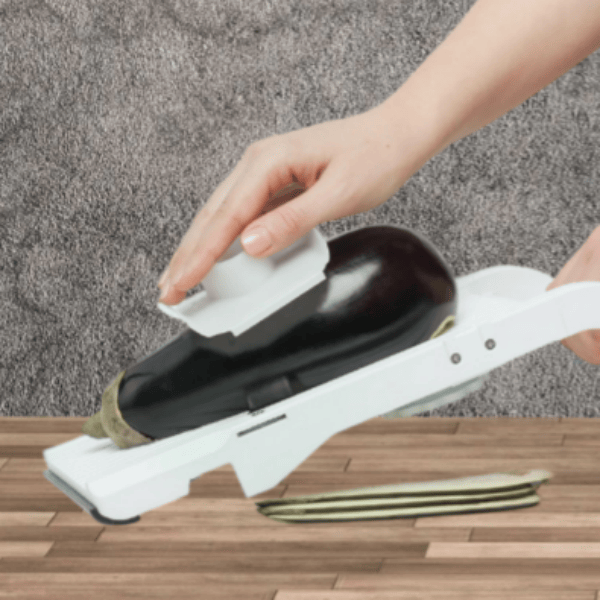
Jumbo No. 120
Whole eggplants and holiday-size batches go across the blade without pre-cutting.
When the slices are uneven, a gratin comes out burnt on top and raw in the middle. Dial the flat blade to 2–5 mm and every round of potato, zucchini, or eggplant cooks at the same speed, so scalloped potatoes, ratatouille, and grilled eggplant all finish together.
Coleslaw and Crunchy Salads
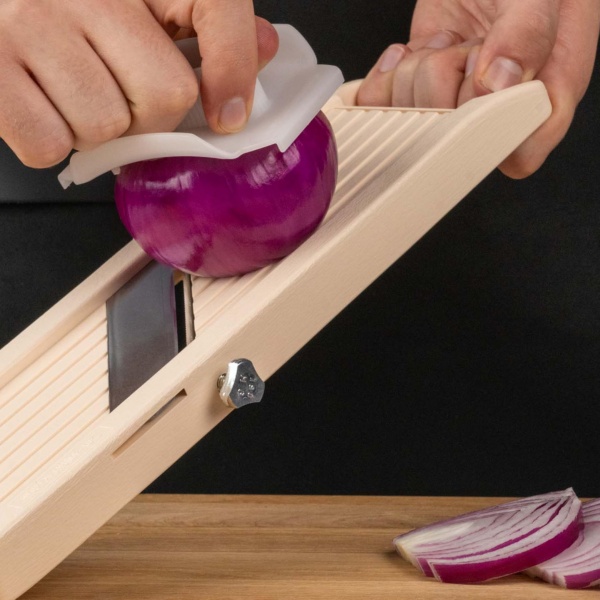
Super Standard no. 95
All four blades come in the box, so any shred width is ready when you need it.
With the medium julienne blade, a whole head of cabbage turns into fluffy, even slaw in about a minute. Switch to the fine blade for carrot salad, daikon pickles, and restaurant-style garnish threads.
Fries and Stir-Fry Sticks
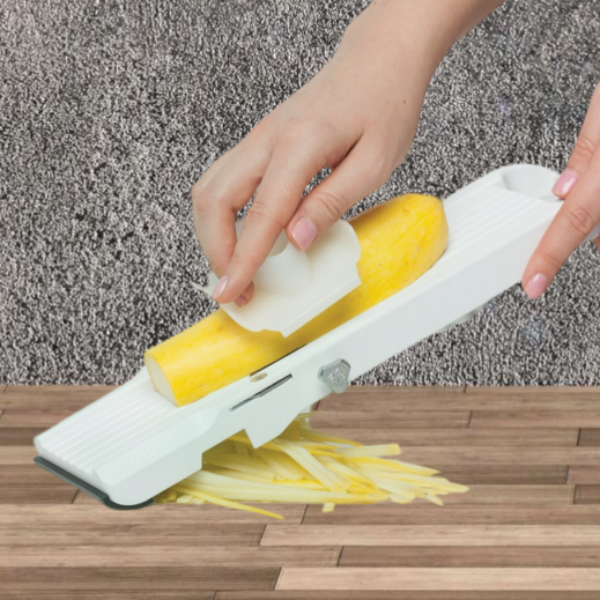
Classic Slicer No. 64
It handles weeknight portions for one or two people and slides right back into the drawer.
The coarse julienne blade cuts chunky strips of potato, sweet potato, carrot, and bell pepper, all the same size. Same size means same cook time, so every air fryer fry comes out crispy and every stir-fry stick stays crisp-tender.
Zoodles and Low-Carb Swaps
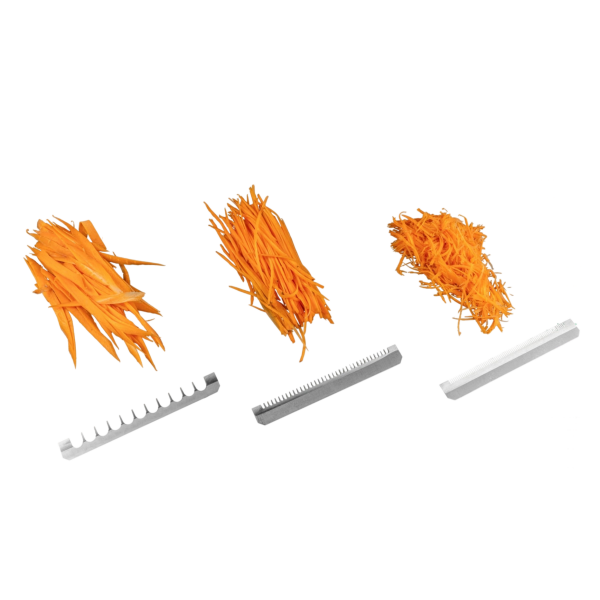
Super Slicer No. 95
The wide surface and stepless dial keep strand width consistent through a full meal-prep batch.
Run zucchini, cucumber, or summer squash lengthwise over the fine julienne blade and you get long, even strands with no bulky spiralizer taking up cabinet space. Prep a week of zoodles on Sunday and your keto pasta nights are basically done.
why choose benriner mandoline
Feel Benriner. Feel The Difference.
Most mandoline blades are stamped out of sheet steel on a production line, deburred, and shipped. That’s it. The edge is functional. It cuts. It dulls within a year of regular use, and there’s no practical way to bring it back.
The Benriner mandoline’s blade goes through a different process entirely. It starts in Yamaguchi Prefecture, Japan, where the steel is compression-formed under high pressure — a step that densifies the grain structure and creates a harder, more resilient edge than standard stamping. From there, each blade undergoes heat treatment to lock in that hardness. The final step is done by hand: a skilled sharpening finish that brings the edge to a level of precision that automated grinding simply can’t replicate consistently.
The result is a blade that hits 0.5 mm slices cleanly. The result is a blade that cuts clean 0.5 mm slices — thin enough to read through — on cucumbers, fennel, and sweet potatoes, pass after pass.
This is exactly why Bon Appétit named the Benriner Mandoline Super Slicer the best mandoline overall, why America’s Test Kitchen called it a co-winner top performer, and why Epicurious put the No. 64 at the top of their experienced cooks list. It’s what happens when the blade is actually built right. The Benriner’s razor edge glides through produce with minimal pressure — which is exactly how a mandoline is supposed to work.
stepless adjustment
One Knob. Every Cut You’ll Ever Need.
The Benriner’s stepless adjustment knob has no clicks, no preset positions. Turn it to where you want it and stop. The gap holds exactly there until you move it again. In practice, that means one tool handles a genuinely wide range of tasks without any of them feeling like a workaround.
At 0.5 mm (1/50″), you’re making translucent potato chips — the kind that crisp up in the oven in under fifteen minutes. Radish slices thin enough to curl in ice water. Apple rounds for a tart that actually fan out properly.
At 1 – 2 mm (1/16″), cucumber rounds for salads hold their structure without going limp. Zucchini slices for a quick sauté cook evenly without falling apart at the edges.
At 3 mm (1/8″), you’re in potato gratin territory. Thick enough to hold up through an hour in the oven, thin enough to layer tightly without a raw center.
At 5 mm (1/5″ to 1/3″) and above, sweet potato planks for sheet-pan roasting. Eggplant rounds for a proper stack. Fennel slices thick enough to grill without disintegrating on the grate.
That range — from paper-thin to about 1/3 inch — covered by a single smooth turn of one knob, on a tool that slides into a kitchen drawer.
comparisons
Benriner Side by Side
The same Japanese steel runs through every model. What changes is the width, the dial, and what you’re slicing.
Benriner Mandoline 64 vs 95
| No. 64 | Super No. 95 | |
|---|---|---|
| Slicing Width | 2.5 inches | 3.7 inches |
| Overall Size | 12.8″ × 3.63″ × 1.2″ | 14.17″ × 5.91″ × 1.57″ |
| Thickness | Easy-turn dial, 0.5 to 8 mm | Stepless dial, 0.5 to 8 mm |
| Blades | 1 fixed + 3 julienne | 1 fixed + 3 julienne |
| Handle | Standard open handle | Larger handle for more control |
| Base | Non-skid rubber | Non-skid rubber, hooks over bowls |
| Takes Whole | Cucumbers, carrots, radishes | Onions, fennel bulbs, apples |
| Storage | Fits a standard drawer | Needs a deeper drawer or shelf |
| Learn more → | Learn more → |
The No. 64 is for small portions and small kitchens. The No. 95 is for bigger produce and bigger batches, and its larger adjustment screw holds your setting more steadily over a long prep session. If you cook for three or more, or you meal prep weekly, the extra width earns its price.
Benriner Mandoline old vs new
| BR-11-E Classic Green | Current White & Ivory Models | |
|---|---|---|
| Design | The original Benriner layout | Refined body, updated handle |
| Body | ABS plastic | BPA-free plastic |
| Thickness Control | Small adjustment bolt | Large easy-turn dial |
| Precision | Good for everyday cuts | Finer, more repeatable settings |
| Base | No rubber grip | Non-skid rubber base |
| Blades | Japanese stainless steel | Japanese stainless steel |
Benriner vs OXO vs Kyocera
| Benriner Super Slicer | OXO Large Handheld | Kyocera Soft Grip | |
|---|---|---|---|
| Blade | Hand-sharpened Japanese steel | Stainless steel | Ceramic |
| Sharpness | Top tier | Good, needs more force on dense produce | Very sharp |
| Thickness Control | Stepless | 7 fixed settings | 4 fixed settings |
| Julienne Blades | 3 included | None | None |
| Fully Disassembles | Yes | No | No |
| Replacement Blades | Sold separately | No | No |
| Learn more → | Learn more → | Learn more → |
OXO is the easiest to learn, with labeled settings and a big hand guard. Kyocera is light and rust-proof but only does flat slices. Benriner is the one to buy if you want the thinnest cuts, julienne blades included, and a blade you can replace instead of throwing the whole slicer away.
user MANUAL
How to Use the Benriner Mandoline
It’s not complicated. Five minutes of setup the first time, 30 sec every time after that.
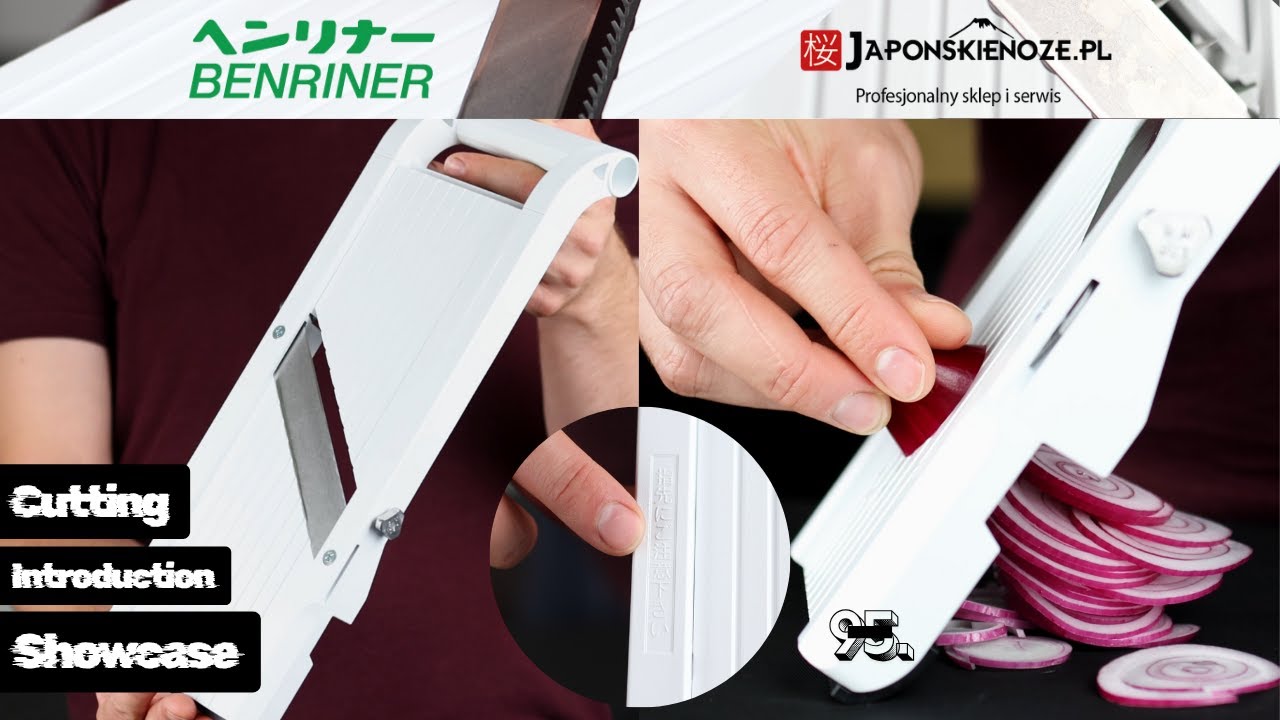
Choose and insert your blade
For straight slicing, the flat blade is already in place. For julienne cuts, loosen the two side screws, slide in your chosen toothed blade, and tighten back down. The blade seats flush when it’s locked correctly.
Set your thickness
Turn the large knob on the underside of the body. Clockwise closes the gap for thinner slices. Counter-clockwise opens it for thicker cuts. There are no preset clicks — turn until it looks right, then run a test pass on a scrap piece before committing to the whole vegetable.
Anchor the slicer
Set the rubber foot flat on the counter, or hook the far end over the lip of a large bowl to catch your slices directly. Both work. The bowl method keeps your prep contained and saves cleanup time.
Protect your hands before you start
The included finger guard works — press the spikes firmly into the vegetable and keep your palm flat against the top. That said, most experienced users reach for cut-resistant gloves instead. They give you better grip, more control over small pieces, and full confidence when you’re moving fast.
Slice with a smooth, even stroke
Push the vegetable across the blade in one fluid motion. Don’t press down hard. Let the blade do the work. Consistent pressure equals consistent slices. If you’re fighting the vegetable, the blade needs sharpening or the thickness is set too wide for that particular piece.
Disassemble and rinse immediately
Don’t let it sit. Loosen the screws, remove the blade carefully — always handle it by the sides, never across the edge — and rinse each component under warm water. A soft brush clears any stuck vegetable fibers. Air dry flat. The Benriner is hand-wash only; the dishwasher will dull the blade faster than anything else.
With daily use, the flat blade stays sharp for years. When it finally dulls, you don’t need a new slicer: replacement blades are sold separately and swap in with the same two screws. You can hone the flat blade lightly on a fine whetstone, but replacement is faster and safer for most home cooks.
Seven Decades of One Obsession
Benriner started in Japan in the 1950s. Not as a kitchen gadget brand. As a single tool, built by craftsmen who believed that a sharp, precise blade — properly made — could change how a cook works.
The earliest versions were wooden. Simple, functional, uncompromising on the blade. As materials evolved, the housing moved to durable plastic. The blade never changed its standard. Still compression-formed. Still heat-treated. Still finished by hand in Yamaguchi Prefecture, the same way it’s always been done.
Seventy years later, the Benriner mandoline sits in professional kitchens across North America and home kitchens in over a dozen countries. Not because of a rebrand or a viral moment. Because the tool does exactly what it’s supposed to do, every single time, and holds up long enough that most users never need to replace the body — only the blade.
Build it right. Keep it simple. Let the cut speak for itself.
Real Customers. Real Reviews.
★★★★★
Works Really Well!!
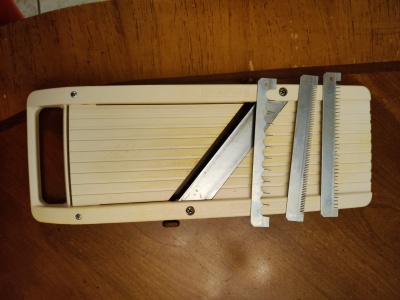
“I’ve gone through a bunch of mandolines, including a really pricey Shun, and this Benriner beats all of them. It’s crazy sharp, solid, light, and the thickness stays exactly where you set it. To be fair, the Shun’s metal frame and stand make it a little easier for huge batches. This newer version is also a real step up from the old Benriners. There’s a non-slip grip on the far end now, and one big knob sets the thickness. That’s way easier than the old bolt, and it doesn’t drift.”
— Daniel
★★★★★
Super Sharp
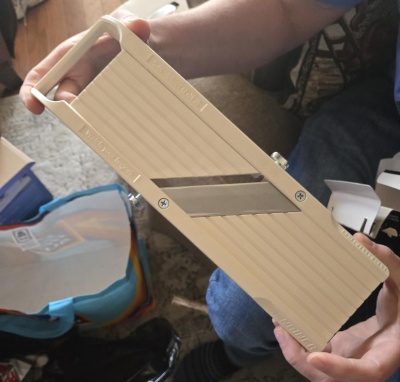
“Super thin onion slices, every single time. This thing is sharp and it’s really well made. I love that you just turn the dial to whatever thickness you want instead of being stuck with a few preset options. I skipped the hand guard and use a cut-resistant glove instead, which I’d recommend to anyone. Yeah, it cost more than I expected. I actually bought a cheap one at the same time to compare, and it’s not even close. This one wins, no contest.”
— William
★★★★★
Best Value Mandolin for Superior Vegetable Slicing
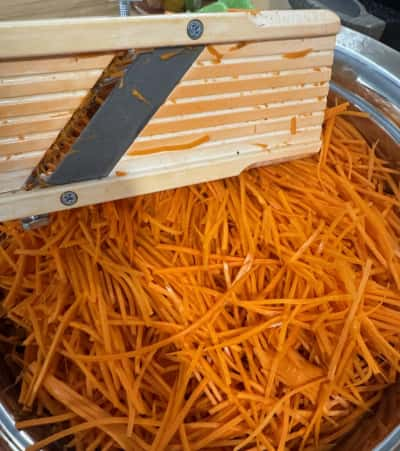
“Honestly, this beats every V-slicer I’ve tried. The mid-size one is perfect for my kitchen. If you slice big stuff like eggplant a lot, get the Jumbo. Buy a cut glove with it, though. The guard that comes with it is kind of awkward, like other people have said. The thickness dial isn’t as idiot-proof as OXO’s, so do a test slice or two until you get used to it. After that it’s easy, and it goes thinner than my OXO ever did.”
— Mary
FAQ
For most home cooks, the Super No. 95. Its 3.7″ width handles whole onions and potatoes, and it still stores easily. Choose the No. 64 for small kitchens or the Jumbo No. 120 for big batches.
Width. The No. 64 slices 2.5″, the No. 95 slices 3.7″. Both use the same Japanese steel, the same 0.5–8 mm dial, and the same three julienne blades.
Yes, with the right technique. Use the included guard for firm produce, and wear a cut-resistant glove for small, round, or wet pieces.
The plastic body can go on the top rack, but we recommend hand washing. Dishwasher heat and detergent dull the blade faster.
Loosen the two side screws, slide out the current julienne blade by its edges, insert the new one, and tighten. The flat blade stays in place.
Lightly, on a fine whetstone. Most cooks simply buy a replacement blade, which costs far less than a new slicer.Sheer and jelly shades will look lighter on the nail at one coat and deepen with each additional layer, so the final result depends on how many coats you apply. Very sheer shades like Crystal Mint may need three coats to reach the opacity shown. The color itself is accurate; the depth depends on build-up.